


The Science of Wellness, Wellbeing, and Recovery
Hot, cold,
and the case for both...
Heat and cold do different things to your body, and a remarkable amount of what they do is the exact opposite of what your phone, your office chair, and your sleep schedule are doing to you the rest of the week.
Your nervous system was built for stress that arrives and ends.
Comfort is draining your energy. Your body actually requires brief, intense bursts of thermal stress—like a sauna or ice bath—to hit the biological reset button, train your cardiovascular system, and force a deeper night of sleep.
The technical name is hormesis: a brief, controlled stress that triggers a recovery response much larger than the stress itself. Twenty minutes at 85°C, three minutes at 4°C, and your body answers each with cardiovascular conditioning, hormonal rebalancing, and a deeper night of sleep.
None of this is exotic. It's what humans did for two thousand years before central heating, and what a generation of researchers have been quietly measuring for the last thirty.

Four doors,
one nervous system...
Each works on its own. Together they cover the full thermal range, moving the needle on sleep, recovery, and long-term cardiovascular health.

Sauna
70 – 95°C
Hot Tub
37 – 40°C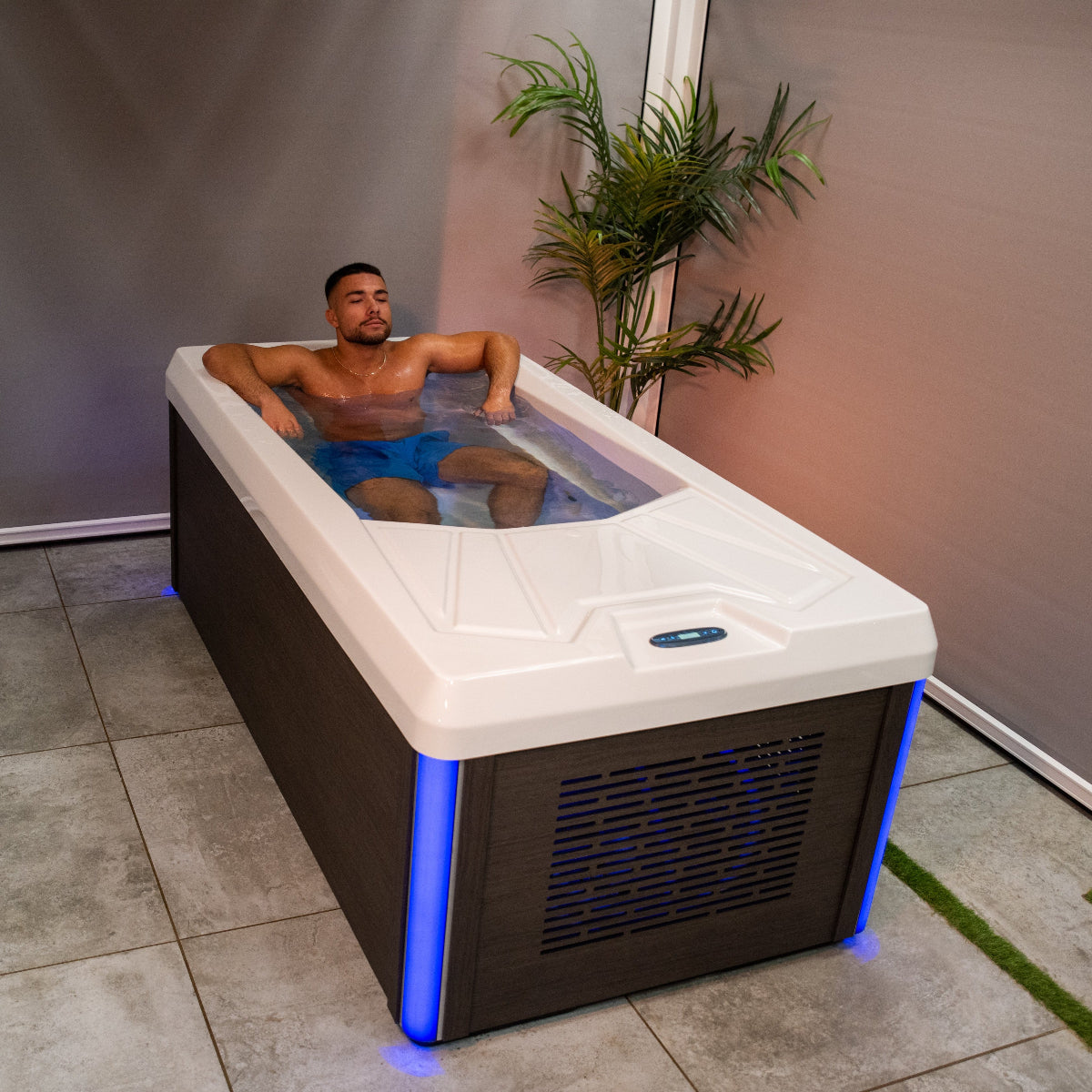
Ice Bath
2 – 5°C
Swim Spa
26 – 32°C
Warm water is passive cardio for a stationary body...
Stiff joints and back pain? Warm water removes gravity's pressure on your spine, while the heat drastically increases blood flow to speed up muscle recovery and melt away daily stress.
At 39°C, your heart rate climbs by roughly 30% (the same load as a moderate walk), while buoyancy lifts almost 90% of your body weight off your joints and spine. The result is a cardiovascular dose without the impact, which is why warm immersion frequently appears in trials for post-operative recovery.
The data is clear. Ready to integrate hydrotherapy into your daily routine?
Explore the hot tub collection
The most-studied longevity habit nobody talks about...
Feeling sluggish or struggling with sleep? Deep, penetrating heat acts like a passive workout, flushing out toxins, relaxing deep tension, and setting you up for a heavy, restorative night of sleep.
Twenty thousand Finns, twenty years of follow-up, and a clear dose-response curve: the more sauna sessions per week, the lower the all-cause mortality. The mechanism is now mapped well enough to design protocols around.

Understand the mechanics? It's time to choose your heat source and start building your protocol.
View the sauna range
Three minutes of cold,
six hours of clarity...
Need a mental reset and an energy spike? A quick plunge triggers a massive release of natural endorphins and adrenaline, leaving you laser-focused, resilient, and energised for the entire working day.
Cold immersion at 2–5°C is the shortest, most metabolically expensive of the modalities. The trade-off is a pharmacological-scale catecholamine release with none of the pharmacology, and a tail of focus, mood, and resilience that lasts the better part of a working day.
Skin contacts water. Vasoconstriction kicks in within 5 seconds; peripheral blood retreats to the core.
Cold-shock response peaks: sharp inhale, elevated heart rate. Practice slows the gasp; the response fades after a week or two.
Norepinephrine (focus, mood, and pain modulation) rises to roughly 5× baseline. It stays elevated for hours.
Exit. Re-warming triggers a slow flood of dopamine that holds for 4–6 hours and shows up subjectively as a clear, even mood.
Prepared for the plunge? Bring the ultimate mental and physical reset into your home.
Discover the ice bath collection
The ultimate environment for
family fun, fitness, and relaxation...
Want a pool without the massive footprint or high maintenance? Get a full-body aquatic workout against an adjustable current, then immediately recover in the heated hydrotherapy seats. Year-round swimming, sorted.
Swim spas combine all the benefits of a full-sized pool with the high-tech hydrotherapy features of a luxury hot tub. Adjustable water currents let you swim in place for a full-body workout, while powerful jets provide hydrotherapy for muscle recovery.
Why compromise? Secure the best of both fitness and recovery in a single footprint.
Explore the swim spa rangeThe case for contrast.
Heat dilates. Cold constricts. Cycling between the two (what the Nordic countries call kontrastbad) pumps blood through your vasculature in a way neither does alone. It's a workout for the blood vessels themselves.
Heat or cold, alone
- Trains one half of the vascular response.
- Single-direction stress on the autonomic nervous system.
- Strong, well-documented cardiovascular benefits.
- Easier entry point; start with whichever fits the day.
Hot + cold, contrast
- Trains the full dilate-constrict response: true vascular flexibility.
- Larger drop in inflammatory markers than either alone.
- Faster muscle-soreness recovery (DOMS −20% vs heat-only).
- Sharper post-session mood lift, longer-tailed.
One week, kept simple...
The dose-response curve in the literature plateaus at roughly four to five sessions a week (approx. 11 mins total cold, 110 mins total heat). Here is a balanced schedule designed for someone with full access.
Sauna · 2× 15m
Start the week with a heavy cardiovascular load to flush toxins and set a deep sleep rhythm.
Hot Tub · 25m
Passive recovery. Off-load the spine and let hydrotherapy soothe muscular tension.
Rest · Full Day
Adaptation day. Allow your nervous system to absorb the thermal stress of the previous days.
Contrast · 3x Rounds
Sauna (12m) to Ice Bath (2m). Extreme vascular expansion followed by rapid constriction.
Sauna · 2× 15m
End the working week with a heavy sweat to release accumulated stress.
Contrast & Social
Saturday contrast rounds, Sunday reserved for active aquatic recovery in the hot tub or swim spa.
Figures on this page are drawn from peer-reviewed research and represent average effects across study populations. Individual response varies. None of this is medical advice. If you're managing a heart condition or pregnancy, speak to your GP before starting heat or cold therapy.